





Creating a New Society Podcast - Meet the Integration Team
This article will take approximately 1 minute to read
Published 13 Jan 2026 in Creating a New Society
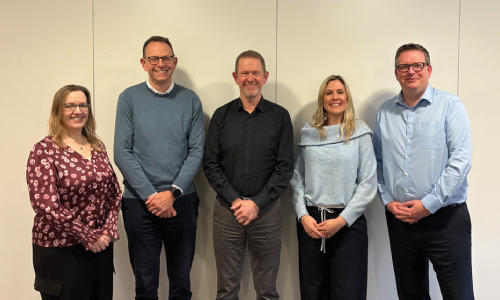
In this week’s podcast, we introduce the final members of the integration team. Watch the Q&A and keep sending your colleagues’ questions to ask@midcounties.coop.
If you missed the first podcast on the integration team, click here.
Skip to a chapter...
0:00 - Intro from Phil Ponsonby, CEO & the Integration team explained
1:08 - Michelle Cemm, People, OD & Comms
3:25 - Andy Peake, Functional Integration & Synergies
6:11 - Chris Chandler, Food Operating Model & Integration
8:13 - Gemma Newton - Brand, Marketing & Membership
10:08 – The next steps
Watch our other podcasts, stay up to date, and find more helpful information about Creating a New Society (including updated Colleague FAQs, USDAW updates) here.
Podcast Transcript Week 14
[00:00:05 – 00:00:09] Phil: Hello everyone, and welcome to the latest podcast in our series.
[00:00:09 – 00:00:25] Phil: Now firstly, I’m just going to say that it’s been snowing, as you probably know, and Gaz, who would normally come here with all his equipment and make it really easy for us, is actually stuck in the snow. So we’re having to improvise today. I’m holding a little mic and I’m going to pass it around as I ask the questions to get the answers, if that’s okay.
[00:00:28 – 00:00:44] Phil: So you’ll recall, if you saw the last podcast, that we covered off the first two workstreams: IT and Data, and Legal and Governance. You heard from Jacob Isherwood and Sean McGovern, who talked to you about their workstreams. I’m pleased to say that today I’m sat with the leaders of the other four workstreams, and we’re going to cover the main focus of their areas and what they’ll be working on.
[00:00:44 – 00:01:08] Phil: So here we go. We’re going to start with Michelle at the end there. Michelle is going to talk a little bit about what she’s leading, the area she’s responsible for, and the really important parts she’ll be focusing on over the next few weeks and months. Michelle, over to you.
People Workstream
[00:01:08 – 00:02:01] Michelle: Thank you very much. So I’m going to be focusing on the People workstream. What we’re looking at here is all of our colleagues across the new Society and what this change means for them. That includes thinking about culture, policies, and how we start to align those areas and understand where there may be differences.
The great thing is that both societies are very similar, with shared historical backgrounds and heritages, so we’re already well aligned. The focus is really about providing clarity for colleagues, thinking about how we transfer colleagues into the new Society, and then setting everyone up for success.
[00:02:01 – 00:02:48] Phil: As the Presidents and CEOs have said while talking to members in the lead-up to the merger, there are around 13,000 colleagues across the two organisations. We also have colleagues from Chelmsford who joined the Central Co-op earlier this year, so there’s a complex mix of terms, conditions, and ways of working.
Nothing is changing dramatically from day one—it will be business as usual—but colleagues are very much front and centre of our minds as we go through this integration. It’s vital we understand their needs and keep listening, so colleagues should keep asking questions and staying engaged as we deliver this workstream.
[00:02:48 – 00:03:13] Michelle: We’ve also been working closely with the unions. Both societies share the same union, USDAW, and we’ve been working in partnership with them. That feedback loop has been really valuable, helping ensure colleagues are informed, included, and represented as decisions are made. So far, things are going really well.
[00:03:13 – 00:03:23] Phil: That’s a really important point. USDAW is a key partner for both societies and will continue to be a constructive part of the merger integration process.
Integration & Synergies Workstream
[00:03:23 – 00:03:52] Phil: Andy, I’ll hand over to you next. You’ve got dual responsibility—leading your own workstream and acting as my backup if I’m not around. Do you want to talk us through your specific area?
[00:03:52 – 00:05:32] Andy: Thanks, Phil. I’ll be heading up the Integration and Synergies workstream across the full project. As we’ve discussed before, there’s a huge benefit to the societies coming together—worth over £16 million a year in synergy savings. My role is to make sure those benefits are tracked and delivered in the right way.
A big part of this involves working closely with the finance team to consolidate areas like tax, treasury, reporting, and supplier payments. Procurement is another significant area, with around £3.1 million of potential savings from aligning supplier contracts.
We also have property and facilities management, where we’re looking at around £3.4 million in savings, while ensuring our trading businesses are properly supported. This isn’t just about cost—it’s also about defining the right operating model, deciding what we insource and outsource, and how we work better together in the future.
We’ve had kickoff workshops already, with more planned, and the ambition is to move profitability from one penny in the pound to two pence in the pound over time.
[00:05:32 – 00:06:07] Phil: It’s a great ambition. Colleagues won’t see much change from day one, as it’s business as usual, but there’s a lot of behind-the-scenes work—things like consolidating banking arrangements to ensure suppliers and colleagues are paid correctly. The bigger prize is the long-term synergies that will be delivered over the next couple of years.
Food Workstream
[00:06:07 – 00:06:21] Phil: Let’s move on to Chris now. Chris, could you outline your main objectives and what you’ll be focusing on?
[00:06:21 – 00:07:39] Chris: Thanks, Phil. Food is a fast-paced business, and both Central and Midcounties Food operations move incredibly quickly. Our biggest challenge for day one is to make sure we don’t interfere with that pace and that trading continues smoothly.
Initially, our focus is very much on business as usual. Over time, we’ll look at finding synergies in policies and ways of working. We know both societies have areas of best-in-class practice, but not always in the same places, so there are opportunities to learn from each other.
It’s also incredibly exciting to be welcoming close to 300 new stores and thousands of new colleagues. That gives us a great opportunity to listen to colleagues on the shop floor and gather ideas on how we can continue to improve the food business.
[00:07:39 – 00:08:04] Phil: That’s a really important point. Best practices from both organisations will shape the combined Society over time. Day one will be business as usual, but there are lots of opportunities for improvement as we move forward together.
Marketing, Membership & Brand Workstream
[00:08:13 – 00:08:34] Phil: Gemma, let’s come to you. We’ve had a really good session this morning around marketing, membership, and brand. Could you give colleagues an overview of your responsibilities?
[00:08:34 – 00:09:11] Gemma: Thank you, Phil. This workstream is incredibly exciting. Consistent communication will be absolutely key, both for day one and into the future. We’ll be focusing on brand architecture—what brings our colleagues and members together—and defining a clear and compelling member proposition.
[00:09:11 – 00:10:03] Phil: There are over a million active members across the two organisations, with some people already members of both. That adds complexity to the member journey, sign-ups, and interactions. We need to make sure things aren’t confusing from day one, while also preparing for exciting future opportunities like cross-trading and new propositions.
[00:10:03 – 00:10:55] Phil: Across all workstreams, our role is to balance pace with doing things in the right way. The benefits Andy mentioned are vital for future investment, but integration also costs money, so we need to be careful. Most importantly, if we get things wrong, we want colleagues to tell us. Open communication is essential, and while we may make mistakes along the way, listening and adjusting is key.
Closing Remarks
[00:10:55 – 00:11:30] Phil: You’ve now met all six workstream leads, supported by a wider group of colleagues. Over the coming weeks and months, there will be more opportunities for people to get involved. For now, the priority is day-one readiness.
Thank you for listening, and as always, thank you for the great work you do every day in supporting our members, customers, and communities.
[00:11:30 – 00:11:38] Phil: Thank you.