
Ramadan and Chinese New Year
This article will take approximately 2 minutes to read
Published 17 Feb 2026 in Colleagues
With many colleagues celebrating and taking part, today we’re talking about Chinese New Year and Ramadan. Help spread the word by sharing our guides with your teams.
Chinese New Year
Today Tuesday, 17 February, we welcome the Year of the Horse - a year associated with energy, resilience and progress. Read our quick guide to understanding what the Chinese New Year is and how it’s celebrated.
Access our colleague Chinese New Year guide and share it with your teams here.

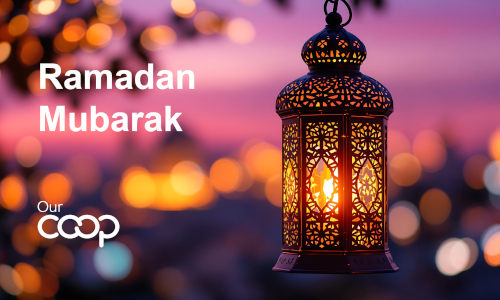
The week also marks the start of Ramadan, which runs from late Wednesday 18 February to Thursday 19 March, and ends with the celebration of Eid al-Fitr.
We hope you’ll take a moment to learn more about others’ cultural and religious beliefs and join us in recognising the richness of cultures and experiences across our Society.
What is Ramadan?
During the month of Ramadan, Muslims won't eat or drink during the hours of daylight. This is called fasting. Children are not expected to fast until they reach puberty, usually around the age of 14.
Ramadan remembers the month the Qur'an (the Muslim holy book) was first revealed to the Prophet Muhammad. The actual night that the Qur'an was revealed is a night known as Lailut ul-Qadr ('The Night of Power').
When is Ramadan?
The Islamic calendar follows the lunar cycle, and as such, the Ramadan 2026 dates will vary from the previous year; typically, it starts approximately 10 days earlier each year. So, when does Ramadan start in 2026?
Ramadan in 2026 is expected to begin on the evening of Tuesday 17th February 2026 or the evening of Wednesday 18th February 2026 (depending on moonsighting) and end on the evening of Thursday 19th March 2026 (depending on moon sighting)
How is Ramadan celebrated?
Most Muslims fast between dawn and sunset and fasting allows Muslims to devote themselves to their faith. It is thought to teach self-discipline and reminds them of the suffering of the poor, however, children, pregnant women, elderly people and those who are ill or travelling don't have to fast. During Ramadan, it is common to have one meal (known as the suhoor), just before dawn and another (known as the iftar), directly after sunset.
The end of Ramadan ‘Eid ul-Fitr’
The end of Ramadan is marked by a big celebration called 'Eid ul-Fitr' (the Festival of the Breaking of the Fast).
Muslims are not only celebrating the end of fasting, but thanking Allah for the strength he gave them throughout the previous month.
Mosques hold special services and a special meal is eaten during daytime (the first daytime meal for a month).
During Eid ul-Fitr Muslims dress in their finest clothes, give gifts to children and spend time with their friends and family. Muslims will also give money to charity at Eid.
Access our colleague Ramadan guide and share it with your teams here.